


In a world where diplomacy can feel like a game of chess played by toddlers, international relations realism steps in as the no-nonsense adult in the room. This theory cuts through the fluff and focuses on the hard truths of power dynamics, where nations act primarily in their self-interest. Forget about warm hugs and global harmony; realism teaches that the international stage is more about survival than friendship.
Overview of International Relations Realism
International relations realism offers a pragmatic lens for analyzing global politics. This approach highlights how nations prioritize self-interest and power over ideals like friendship and harmony.
Definition and Key Concepts
Realism centers on key concepts such as anarchy and state sovereignty. Anarchy denotes the absence of a global authority, leading states to rely on their capabilities for security. Power dynamics drive international interactions, making national interests central to foreign policy decisions. Realists assert that survival in a competitive environment demands a focus on military strength and strategic alliances. Moreover, moral considerations take a backseat to pragmatic calculations, emphasizing the harsh realities of international relations.
Historical Context
Roots of realism trace back to ancient times, with thinkers like Thucydides analyzing human nature and power struggles. The modern iteration emerged post-World War II, driven by disillusionment with idealism. Prominent scholars, including Hans Morgenthau, shaped realism’s academic foundation, articulating its principles in the context of the Cold War. This period heightened awareness of national interests and security concerns, as nuclear capabilities reshaped global dynamics. The enduring relevance of realism manifests in contemporary international relations, influencing strategies adopted by various states.
Major Theories Within Realism
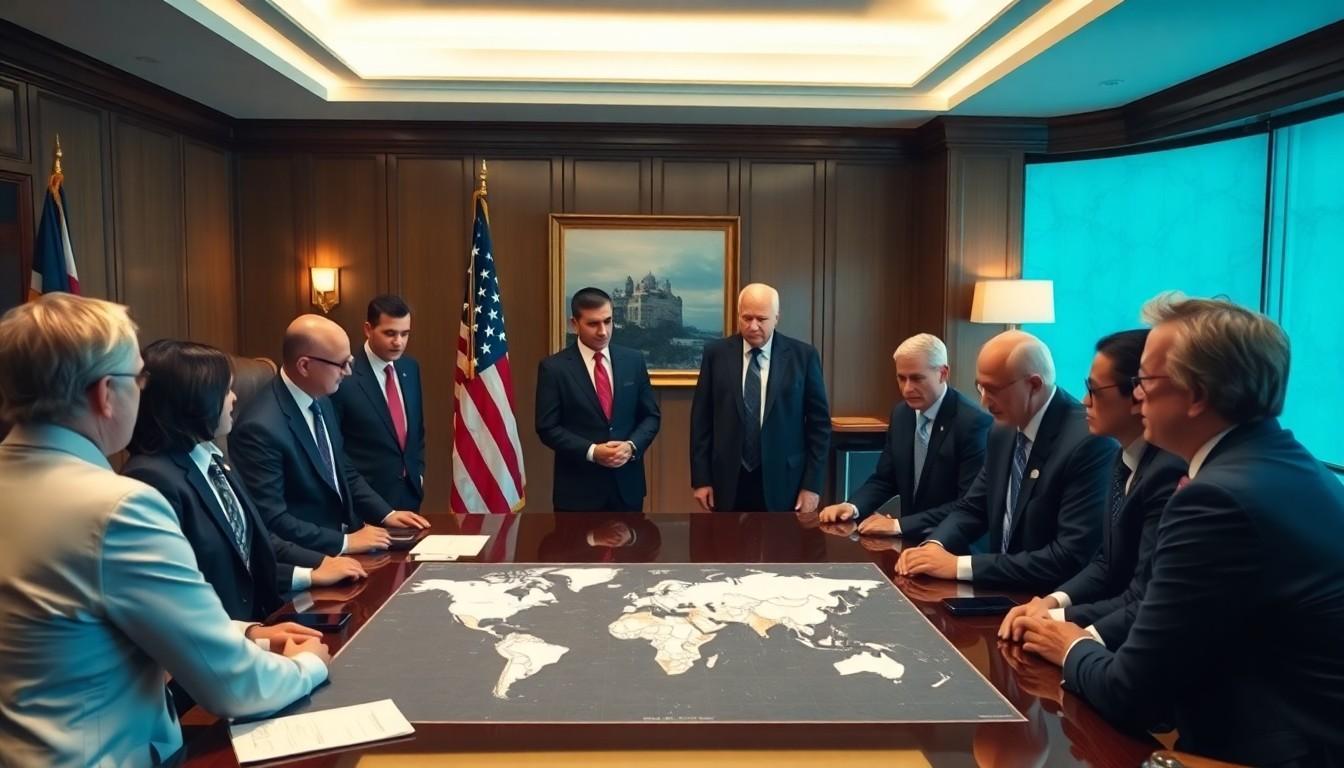
Realism encompasses several major theories that shape its understanding of international relations. Each theory provides unique insights into power dynamics and state behavior.
Classical Realism
Classical realism centers on the assumption that human nature drives international politics. Scholars like Thucydides and Machiavelli emphasize the darker aspects of human behavior. Power and self-interest dominate their analyses of state actions. Concepts like anarchy and competition within the international system play vital roles in the classical realist framework. This theory suggests that morality often becomes secondary to the pursuit of national interests. Consequently, military strength remains crucial for ensuring state survival in a chaotic world.
Neorealism
Neorealism, or structural realism, shifts the focus from human nature to the structure of the international system. Kenneth Waltz, a prominent figure, argues that the anarchic structure compels states to act in self-interested ways. In this theory, the distribution of power among states determines their behavior. An emphasis on system-level variables illustrates how the balance of power influences state interactions. Neorealism posits that states prioritize security above all else, leading to alliances and competition. This approach refines classical realism, incorporating a systematic analysis of power dynamics within global politics.
Key Thinkers in Realism
Realism in international relations features contributions from several key thinkers who shaped its fundamental principles.
Hans Morgenthau
Hans Morgenthau significantly influenced realism through his work, “Politics Among Nations.” In this text, he articulated the concept of political realism, asserting that power dynamics underpin international relations. Morgenthau’s idea that moral principles don’t guide the actions of states challenges idealistic perspectives. He emphasized that state interests revolve around power, arguing survival necessitates pragmatic decisions over ethical considerations. Realists recognize his belief that human nature drives these power struggles, revealing the darker aspects of international politics.
Kenneth Waltz
Kenneth Waltz introduced neorealism, expanding realism’s theoretical foundations. His seminal work, “Theory of International Politics,” focuses on the structure of the international system rather than human nature. Waltz argued that anarchy compels states to prioritize security and self-interest. He proposed that balance of power shapes state interactions in a competitive global environment. By emphasizing structural factors, Waltz provided a systematic approach to understanding state behavior. His insights remain critical to contemporary discussions on realism and national interests.
Critiques of International Relations Realism
Critics raise significant concerns about the implications of realism in international relations. They often highlight its narrow focus on power dynamics and self-interest, potentially sidelining ethical considerations.
Ethical Concerns
Ethics play a crucial role in evaluations of realism. Critics argue that an exclusively pragmatic approach fosters a perception that moral principles are irrelevant in global politics. Situations arise where states prioritize survival over humanitarian issues, leading to controversial decisions. The disregard for ethical considerations may perpetuate violence or exacerbate humanitarian crises. Scholars emphasize that ignoring morality can result in real-world consequences that harm global cooperation and long-term stability.
Limitations in Application
Realism exhibits limitations when applied to global scenarios. Its emphasis on state-centric behavior often neglects the influence of non-state actors, such as international organizations and multinational corporations. These entities increasingly affect international relations and challenge the realist paradigm. Furthermore, realism struggles to explain the complexities of global issues like climate change, where cooperation proves essential. Focusing solely on power can inhibit comprehensive solutions to transnational challenges that require collaborative efforts.
The Future of International Relations Realism
International relations realism continues to shape global discourse, demonstrating its significance within contemporary political landscapes. By focusing on self-interest and power, realism maintains its relevance in an increasingly complex world.
Relevance in Contemporary Politics
Realism’s emphasis on state security and power dynamics resonates amid current geopolitical tensions. Countries navigate relationships through lenses of self-interest, revealing the ongoing application of realist principles. The rise of nationalism and ongoing conflicts underscores the notion that survival often outweighs idealistic aspirations. Recent events, such as the Russian invasion of Ukraine, exemplify how realism guides nations confronting threats to sovereignty. Multiple states’ military readiness further highlights realism’s influence on diplomatic interactions. Furthermore, realism’s critique of moral considerations invites vital discussions about the balance between ethics and strategy in foreign policy.
Integrating Realism with Other Theories
Integrating realism with liberalism and constructivism offers a more nuanced understanding of world politics. Combining principles enhances analytical frameworks, allowing scholars to address both power dynamics and cooperative practices. Realists recognize that cooperation often occurs under anarchy when states align their interests strategically. In turn, liberalism emphasizes international institutions and economic interdependence as reinforcing elements. Constructivism adds depth by considering how identities and norms shape state behavior. Consequently, the synthesis of these theories creates a robust approach, addressing multifaceted challenges from climate change to global security. The interplay of these perspectives enriches discussions on international relations, demonstrating the multifarious nature of global politics.
Conclusion
International relations realism remains a vital framework for analyzing global politics. Its focus on power dynamics and national interests provides a clear lens through which to view state behavior. As geopolitical tensions rise and new challenges emerge, realism’s insights into security and survival continue to resonate.
While critiques highlight the limitations of a purely realist approach, integrating it with other theories offers a more comprehensive understanding of international interactions. This synthesis can illuminate the complexities of modern diplomacy, where both power and cooperation play crucial roles. Ultimately, realism’s enduring relevance underscores its importance in navigating the intricate landscape of global affairs.


