

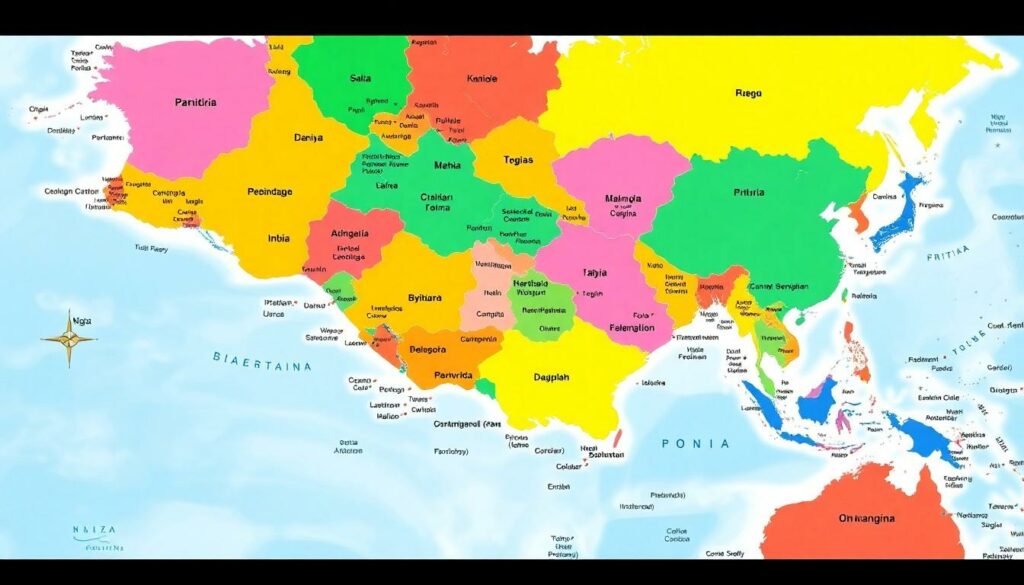
Ever stared at a political map and wondered if the colors were chosen by a toddler with a box of crayons? Political maps can be a bit of a visual puzzle, but they hold the key to understanding the world’s complex landscape. They tell stories of borders, alliances, and sometimes, a whole lot of drama.
Table of Contents
ToggleUnderstanding Political Maps
Political maps serve as visual representations that illustrate political boundaries, territories, and relationships between different regions. They help in comprehending the complexities of political structures across the globe.
Definition and Purpose
A political map provides a detailed depiction of the boundaries that define countries, states, and other political entities. Its primary purpose involves showcasing how these entities interact within the global landscape. Such maps often highlight significant features like capitals, city names, and geographic areas, facilitating analysis of geopolitical relations, conflicts, and alliances. Additionally, these maps aid in promoting an understanding of regional power dynamics and governance.
Key Features of Political Maps
Key features of political maps include distinct colors used to represent different countries, states, or territories, creating visual contrast. Labels for key cities and capitals serve as important reference points for understanding political geography. Borders between countries are clearly defined, emphasizing territorial claims and disputes. Political maps may also indicate various geopolitical features like bodies of water or mountain ranges, adding context to the political landscape. The inclusion of legends enhances clarity, as it explains the symbols and colors utilized throughout the map.
Types of Political Maps
Political maps come in various forms, each serving distinct purposes in understanding geopolitical structures.
World Political Maps
World political maps illustrate global political boundaries and relationships among countries. Their design features clearly marked borders and labeled capitals, enhancing clarity and comprehension. For example, these maps often use colors to depict different countries, making it easier to identify territories and alliances. Major geographical characteristics, such as oceans and significant mountain ranges, are also indicated to provide context. Information on international organizations and treaties may accompany these maps, reflecting the complex interactions that shape political dynamics on a global scale.
National Political Maps
National political maps focus on the political landscapes within specific countries. They exhibit state and provincial boundaries, offering insights into local governance structures. Major cities, capitals, and important transportation routes receive special attention to highlight connectivity. Such maps often incorporate political features like electoral districts, showcasing how representation is organized. The visual presentation helps in grasping the internal divisions that influence politics at the national level.
Regional Political Maps
Regional political maps provide an overview of political boundaries within a defined area, such as a continent or a specific geographical region. These maps highlight relationships among neighboring entities, illustrating political affiliations and tensions. Features like regional capitals and key transportation networks often appear prominently to demonstrate connectivity and influence. Understanding these regional dynamics can reveal the complexities of cooperation and conflict among neighboring countries. Such maps are crucial for grasping localized political situations, providing context for regional decision-making.
Importance of Political Maps
Political maps play a crucial role in visualizing the geopolitical landscape. They provide a clear understanding of regional dynamics and international relations.
Educational Use
Political maps are instrumental in education, enhancing comprehension of political geography. Students use these maps to learn about borders and countries, fostering awareness of global issues. Teachers often incorporate political maps into lessons, allowing students to visualize complexities in governance. The clarity provided by these maps aids in discussions about historical events and current affairs. Interactive political maps engage learners, making information accessible and stimulating critical thinking.
Electoral Significance
Political maps hold significant importance during elections, illustrating voting districts and electoral boundaries. They help voters understand their representation, highlighting how district lines affect election outcomes. Analysts rely on these maps to study political trends and demographics, uncovering patterns in voting behavior. Candidates use political maps to strategize their campaigns, identifying key regions based on voting data. Access to accurate political maps is essential for an informed electorate, as it shapes perceptions and influences political engagement.
Analyzing a Picture of Political Map
Analyzing political maps reveals distinct features that provide insights into geopolitical structures. Key elements include boundaries that define countries and regions. Labels for major cities and capitals enhance the map’s clarity, offering information about important political centers. Color variations indicate different territories, allowing for quick visual differentiation.
Elements to Observe
Elements commonly found on political maps include borders that outline territories and geographical features that provide context. Major cities receive prominent placement, as they represent significant political or economic hubs. Legends clarify various symbols and colors, promoting understanding of the information conveyed. Analysis of these components enables better comprehension of regional dynamics.
Common Symbols and Colors
Common symbols found on political maps signify specific features like capital cities marked with stars or triangles. Different colors denote varying political entities, such as dark colors representing larger, more populous countries. A range of styles highlights relationships between territories while showcasing alliances or disputes. Recognizing these symbols and colors helps interpret the map’s narrative effectively.
Conclusion
Political maps are indispensable tools for grasping the complexities of global and regional dynamics. They not only depict borders and territories but also illustrate the intricate relationships between nations. By providing a visual representation of political structures, these maps enhance understanding and facilitate informed discussions about governance and international relations.
As educational resources, political maps enrich the learning experience for students and engage voters during elections. Their detailed features and clear legends allow users to interpret geopolitical narratives effectively. With their vital role in shaping perceptions of political landscapes, political maps remain essential for anyone seeking to navigate the ever-changing world of politics.


